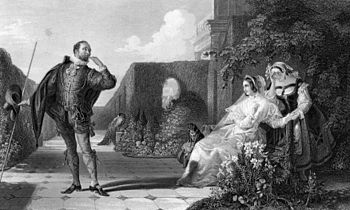
 At the time of writing, there are various productions of Twelfth Night going on: The National, Salisbury, Globe ... and the Winchester players are taking it to the Minack in Cornwall this summer. And of course thousands of school students have the joy of being examined on it. So, here is my guide to the play, scene-by-scene, published as a downloadable, photocopiable resource by zigzag. Hope someone, somewhere, finds it useful.
Sunday, 4 June 2017
Twelfth Night: Comprehensive Guide
At the time of writing, there are various productions of Twelfth Night going on: The National, Salisbury, Globe ... and the Winchester players are taking it to the Minack in Cornwall this summer. And of course thousands of school students have the joy of being examined on it. So, here is my guide to the play, scene-by-scene, published as a downloadable, photocopiable resource by zigzag. Hope someone, somewhere, finds it useful.
How to Read a Poem
 I'm delighted to be involved in this short guide to reading poetry. It was quite a collaborative effort. I was able to draw on excellent work by Andrew Hodgson, the thoughts of Caroline Moore, and the editorial work of Jon Connell. The result is intended to be accessible for readers from 13 upwards. It's published simultaneously with the snappy, sensible guide How to Write Well by journalist Tim de Lisle. Connell Guides aim to help those facing exams, but to go well beyond exam mentality. If this helps readers young or old find or refresh their confidence and pleasure in poetry, then it will have done its job.
Sunday, 2 October 2016
The Threepenny Opera
 I was up at the National Theatre at the weekend for the New Views teachers' course, and a trip to The Threepenny Opera was thrown in. Never one to turn down an evening with Brecht and Weill featuring gangsters, beggars and prostitutes, I happily grabbed the ticket, realizing I'd only ever heard, but never seen, this Weimar masterpiece. Once, when the earth was in an earlier stage of its development, I wrote an A Level thesis, unpretentiously entitled 'Art in the Weimar Republic: Development and Dissemination'. Memories flooded in of the Bauhaus, of the Expressionists, and of those merry souls Beckmann, Grosz and Dix. The designers had clearly been looking at the same images: the look of Celia Peachum here, for example, was clearly modelled on Dix's portrait of Anita Berber, and Peachum's hairpiece was the exact same style as sported by Dix's wife Martha. Although the piece had been transposed in the script to London (not, perhaps, such a leap from the festering rancour of 20s Berlin to modern hard-Brexiting Britain), it was a German twenties visual we saw, and all the stronger for it.
As for the work itself, it's hard to get a grip on. Taking off from Gay's A Beggar's Opera, which parodied the operatic conventions of the day with a story featuring a highwayman as hero and a medley of popular songs, The Threepenny Opera is a satire based on satire. It's very very knowing and self-conscious about what it's doing. Over its own genesis the work turned from being mainly a musical to a play with musical numbers, the main credit shifting from Weill to Brecht. What is it now? An anti-musical, perhaps one might call it, a feel-bad show (as MacHeath reminded us, verfremdungheitingly out of character, when we dutifully came back for the second half). It promises at the outset that no moral ending is envisaged, and throughout laughs knowingly at its own operatic formulae. Choruses, duos, arias are all poured out in a thick tar of cabaret songs, delivered with a snarl, and rendered naughtily delightful by an exhilarating set of obscene lyrics provided by translator / adapter Simon Stephens. And at the end, a deus ex machina and a parting moral are provided, the first for a laugh and the second for, perhaps, real. Brechtian alienation is a more dynamic thing than we are sometimes told, I think: instead of keeping us at a kind of arm's length from emotional engagement, it draws us in and then pushes us away again. Passages of bleak realism are undercut with a caustic joke or piece of knowing stage action; a storyline involves us then calls attention to its unreality.
The production itself made full use of the Olivier space, building up from a backstage look of platforms and flats to some clever designs, which quickly assemble and equally quickly collapse. Rory Kinnear was a suitably seductive MacHeath, who we can't hate as much as we know we should (I hear what he did at Kandahar and I still want him to escape - what's wrong with me? Aha! thus is the Brechtian mirror held up to my self-contradicting little mind). That's partly because those after him are if anything even worse, and because the world of sewers can, logically, only produce the sewer-dwelling rodent. There is a problem, though, in hammering on at length about how squalid and corrupt the world is and I must admit, by the end of the very long first half the songs were starting to sound pretty much the same as each other and to say the same things over and over again. Powerfully delivered, though. Nice - by which I mean not nice - movement work, neat differentiation of characters among MacHeath's gang, some fine choreography in, for example, the arrest of our vile yet strangely dashing hero. Still, that first half did feel long. The second was tighter, the story coiling around us. There was no escaping the sense of the play's bold, blustery bigness by the end. Great programme essay, too, by Dan Rebellato, on why we need Brecht today. His first reason is that Brecht is fun - it's the fun of kicking over a sandcastle and making, say, a sand abattoir instead. That sort of fun. But what was left after the fun, that evening? A sense of self-satisfaction at having seen a European classic at the National? Is the socially probing mischief lost among the well-heeled theatregoers of today's London theatre? Has the anti-classic simply joined the dinner party as another member of the canon? Well, Brecht would want me to be leaving with that kind of question, I suppose, hastening down the tunnel past Imax to catch the 10.35, developing and disseminating as I go.
Dedication
 Southampton's Nuffield Theatre is staging the premiere of Nick Dear's new play, Dedication. This work gives us a speculative exploration of the possible relationship(s) between Shakespeare and his patron Henry Wriothesley (pronounced 'Rizzley'), the Third Earl of Southampton. The play is constructed on a slender basis of known facts. It's historically likely that when the theatres closed for plague in 1592-3, Shakespeare turned to writing narrative poetry, Venus and Adonis (by far and away his most popular work during his lifetime), then the more austere The Rape of Lucrece. These poems are dedicated in fulsome flattering terms to Southampton, but nothing can really be read into that language, since gushing dedications were the convention of the time, like long acknowledgements pages in academic books today. Beyond the dedications nothing is known of the nature of the relationship between these two men. There is a theory that the sonnets may have been commissioned by Wriothesley's family to encourage him to marry, and the play includes an enjoyable joke for the cognoscenti about the first seventeen sonnets all being basically the same. Henry Wriothesley (HW) has even been proposed as a candidate for the mysterious Mr WH, to whom the sonnets are dedicated by the printer.
The Essex Rebellion, which Southampton was drawn into, is certainly historical fact, as is the curious detail that one of Essex's followers persuaded Shakespeare's company, The Lord Chamberlain's Men, to take the mothballed Richard II play and put it on, presumably because it showed an ineffective monarch being usurped. (It's not absolutely certain this was the Shakespeare play.) The company was questioned over this, but Shakespeare was not interrogated by Star Chamber, as he is at the start of Dedication. This is, of course, the play playing with notions of history and reality. As a dramatic opening device, the interrogation of the bard provides a neat entry point into the substance of the play, which shows various parallel scenarios for how WS and HW may have known each other: these range from Shakespeare being hired to help HW brand himself as a cultivated aristocrat among his circle (for my money, the least sexy and most likely option), across a spectrum of intimacy to the two men being passionate lovers (not impossible). The alternative scenarios reminded me of Nick Payne's Constellations, which I also saw at the Nuffield, and Kurosawa's film Rashomon, where the same event is narrated differently by those involved in it. This approach to playmaking is certainly licensed by Shakespeare's own use of invention in his historical dramas, and his assertion, as a character in Dedication, that history is largely a matter of imagination anyway. And we have an instinct to fill in the gaps which, in this instance, are many. Memory, as WS says at one point in the piece, dies with us. If you don't record what happened, it's gone forever.
I found Dedication an intriguing play. It presents Shakespeare as rather a low-key figure, in his lack of dazzle not unlike the portrait given in Edward Bond's Bingo. It is as if the exuberant wordsmith has been left on the pages of his writings, leaving behind an enigmatic cipher, who could be anyone and anything. HW is of course a spoiled Riot Club sort of brat, at his most compelling when he recounts the horrors of the Irish expedition, which, in real history, he undertook under Essex. The production is directed in the round by Sam Hodges, on a simple rotating set with a central platform (which goes up and down). With no furniture and minimal props, this simple space turned from court to chamber to a street in Shoreditch to a prison cell - a nod to Shakespeare's own theatrical world. Music was provided by four cowled singers (recalling the recent RSC Richard II), but to speak over these the actors were amplified, which shouldn't really have been necessary in a small space. I'd have liked to see a real actor as the Star Chamber judge, whose voice was recorded. Perhaps it was felt this would blur the focus on the duologue. The two actors, Tom McKay (WS) and Tom Rhys-Harries (HW) covered with great skill the script's emotional range, from light-hearted banter to the intensities of love and anger (there is even a swordfight!). A strong work by Nick Dear, and another evening well spent in the Nuffield leaving one with a memorable theatrical meditation on history, memory and art. Looking among the blank spaces of historical record, we ask, what do we know, after all, even of ourselves and one another?
Friday, 8 July 2016
Romeo and Juliet
 Before the live streaming of the Kenneth Branagh production of Romeo and Juliet there were some brief video interviews with teenagers. The interviewees were asked what was best and worst about being a teen, and - moving into the Shakesperean zone - whether they believed in love at first sight. They weren't asked whether they thought it would ever be a cool idea to fake death through drugs in order to meet their exiled beloved in a tomb, though. And the question of arranged / forced marriage was not brought up, either. Anyway, this warm-up was a refreshing change from the somewhat gushing interviews we sometimes get at the start of live theatre screenings.
The production itself was strikingly broadcast in black and white. It can't have been much different in the theatre: the whole white-grey-black chromatic design was inspired by the films like La Dolce Vita, with sharp suits and slick or laid back movement styles to match. In the Capulet ball there seemed to be a nod to the amazing protracted party sequence of The Great Beauty, with its short electro score and angular choreography. There was the architecture of Fellini, too. A simple set of stone walls and columns was used to suggest a flow of scenes from piazza to café to sepulchre, in dramatic mediterranean light. Some jazzy numbers were added, with well-chosen moments of ambient soundtrack at key moments. Lily James and Richard Madden shone as the lovers, finding a seductive playfulness in the verse. This is the first production I can remember where comedy was discovered in the balcony scene, and it made their joyous discovery of love all the more affecting. Given the poster, the erotic aspect was played down here. Senior actor Derek Jacobi was cast as Mercutio, which seemed a peculiar choice as this part is normally seen as a hot-blooded, even manic, natural stand-up and hell-raiser; but it all made sense when in the preamble Branagh explained his inspiration in reading of the ravaged Oscar Wilde haunting cafés in Paris: and so we got Mercutio the faded playboy, hanging out with the young bloods, not manic but mellow, dreaming of past conquests. His brief song was charming, and the death that followed soon after was very touching, making a lot of the idea of a 'scratch', of the pointless contingent nature of it all. Overall the production did what it should do, allowing the emotional realities behind the narrative to unfold, so we could see that the play is also the tragedy of the Nurse, of Paris, of the now childless Capulets, of a culture in the chiaroscuro of love and death.
Of course there is always the oddity of the Friar. What the hell does he think he is doing? Would it have been possible - or prudent, anyway - for a priest simply to marry off the children of seriously powerful families in the city just like that, without, you know, checking it was OK? And you don't need to be obsessed with risk assessments to see that the whole precision-timed escape through drugs business is a non-starter. It did look in this production that the herb-dealing Friar wasn't going to be allowed to scamper back to his breaking bad lab any time soon, at any rate. But, hey, Shakespeare is allowed creaky plots. The production was powerful, balancing quick passages of movement with stillness. Star of the evening was Lily James, who balanced passion with clarity, conveying a girl at once in command and hopelessly out of her depth. The 50s look worked to good effect (though the Prince looked more like a traffic warden than an absolute ruler), and for me it was a night at Okehampton Carlton well spent, even if I did have to move grumpily away from a row of people who felt the need to chomp on crisps through the whole thing. Seeing a London show on the edge of Dartmoor, many a mile from London, brought home the value of live streaming. With one cavil, though. A superb touring company in Winchester not so long ago had undeservedly small houses. If there's any evidence that streaming shows with big names is impacting on live theatre in this way then I hope something could be done - some share of profits recycled back through the relevant funding body, perhaps? It was something to ponder, on a memorable drive back in the dark and rain through winding, deer-haunted country roads.
Monday, 27 June 2016
Brexit Referendum: First Reaction
The extremists were quick to respond. 'We did it! Today is our 'Independence Day', a day that will live forever as the day that we asserted our sovereignty, freedom and democracy'. That is the reaction of Britain First, the gang loyally served by the murderer of MP Jo Cox, and it is clearly a sentiment shared by a mass of the British people. Across Britain and Europe the far right are punching the air with joy. 'Job done' tweets the British National Party. The maverick tories who have used the referendum to launch a power grab from the right are congratulated for their good work by Marine le Pen in France and Geert Wilders in Holland. Meanwhile the civilised world looks on in disbelief.
Why disbelief? Because this was not a difficult debate, finely balanced with strong arguments on both sides. It was OBVIOUS from the facts that Britain is / was much better off as part of the world's strongest trading bloc and had some claim to greatness by being part of something greater than itself. But the large numbers who are fed up after years of global economic stagnation have been convinced by the crudest Trump-modelled propaganda that the source of their suffering lies in Brussels and in the immigration resulting from the free movement of labour in a free market. Invent an enemy to disguise the real one: lesson one. Add to that the Little Englanders of Telegraph-land and the alternative universe conjured up by the Brexit lobby was strong enough to deflect attention from reality for long enough to secure the result now being toasted by Britain First et al.
What will happen now? Nobody knows, of course, and the instigators of this act of national self-harm had to admit they have no plan at all. None of the alternative scenarios, from Norway to Canada, are viable or even attractive for this country. But if you are a Leaver and are reading this, I think you can be certain that you have NOT 'taken back control' from Brussels or anyone else. If anything, you have GIVEN power to Brussels, who can now dictate punitive terms to allow Britain to carry on trading with them and with an eye on deterring fellow travellers. It's a fact, not an opinion, that the UK needs the EU much more than the EU needs the UK. We now have to negotiate with - I repeat - the most powerful trading bloc in the world - which outnumbers us 27-1 and has no reason at all to grant us any special terms. One of the conditions insisted on, incidentally, will be the free movement of EU workers. Migration was always a red herring in this discussion. Leavers have also given control to some very dangerous people on the far right of politics, who have never hidden their contempt for the vulnerable and the provisions created for them by the post-war social welfare consensus. It's a reasonable prediction on the evidence available that time will not be lost in repealing the raft of EU legislation that protects workers from exploitation and provides them with some dignity, with asset-stripping of the NHS to follow swiftly. So, yes, migration may go down a bit, but only because the UK will be such a horrible place to work in. Cheap and easily expendable labour will continue, of course, only it will be provided by the British people themselves, before they are cast off with miserable pensions or no pension at all by masters who have never set foot in the country. Did I say the UK? Scotland's separation is only a matter of time, and while the mechanisms for Northern Ireland are less clear, as beneficiaries of the EU who actually acknowledge that fact, they would clearly be better off separating from their vain and deluded former governors once and for all. Leavers will certainly not see any 'savings' or enjoy the slightest degree of extra control over their country's destiny, now more exposed than ever to the rapacious behaviour of unfettered global capital.
Personal disclosure. The markets have opened and I fully expect the savings I have put aside in stocks and shares ISAs to lose massively in value. The money I have in the bank is already worth far less than it was yesterday. Soon I may well be paying more for my house than it is worth. My Spanish wife, besides being numbed by the arrogance and ingratitude of her adoptive country, is wondering for how much longer the country she has paid taxes to for years will afford her any NHS provision or a state pension. What will anyone's pension even be worth in a few years, anyway? Pension funds depend on share values, which are in meltdown. Across the whole country similar stories will be unfolding. I consider myself a patriot, if that term retains any decent meaning. I love my country, its landscape, its culture, and the humour and gentle spirit of the natural-queue-forming British people. But that culture and spirit have been coarsened beyond recognition by forces that have nothing to do with Brussels or Polish builders or Syrian refugees. On this beautiful morning, it looks like the fractured and shrinking UK will revert to the island that Virgil described, 'et penitus toto divisos orbe Britannos': the Britons, cut off by the whole width of the world. Which is what the nation's Brexit-Dignitas dreamers wanted, I suppose. And so we go back to those glorious island days, and take our rightful place among the nations of the earth as an offshore tax haven for oligarchs, a playground for media moguls, the closing-down-sale store of the western world. I hope I am wrong - how could I not hope? - but in the immediate aftershock of the event, and using the best judgement I have, that, Leavers, is the control you have got and the freedom you have voted for.
Sunday, 17 April 2016
Les Blancs
 The big new show at NT's Olivier is Les Blancs, by Lorraine Hansberry, the brilliant American playwright who died aged just 34. I'd been gripped by A Raisin in the Sun a few weeks ago, so was easily tempted by a preview offer to see this production of her last, unfinished, work. Both plays are issue-driven: A Raisin throws a spotlight on the life a black family in Chicago in the 1950s, while Les Blancs explores the topic of African independence at the same period. There is not quite the same sense of going inside a family and its complicated internal relations here, though we do get to know the 'family' of The Mission compound and the African characters around whom the action develops: Tshembe Matoseh, who has returned home from extended travels in Europe and America to bury his father, an emblematic patriarchal figure in a country in the first stages of violent uprising against the oppressor; there is Tshembe's elder brother Abioseh, who has integrated with the colonisers to the extent of becoming a Catholic priest; and there is his half-brother Eric, literally a product of the West's possession of the dark continent. Tshembe seems quite unacculturated to the world of the whites, which he has seen quite extensively and even married into. Indeed, his sojourns abroad have thrown him back into a passionate reclaiming of his African identity. He angrily rejects overtures from the journalist Charlie Morris to find common ground, believing that the ills suffered by Africa are simply too great to be dissolved in civilised conversation over whisky and cigarettes. He implies, but does not quite state, the inevitability of some kind of violent cleansing expiation. By contrast, his brother Abioseh follows a pacific path - 'Christ has given me no choice' - and reminds Tschembe of the atrocities of the rebels who are attacking families at night and killing children. In a mood of complete despair at finding any kind of entente, things march to an apparently destined disaster.
The script is the final text adapted by Robert Nemiroff, Hansberry's husband. From the script alone, it must be said it is in several passages thuddingly didactic, with scenes that would be handy in a textbook of colonial history and international politics. Characters fall neatly into types that illuminate positions in the conflict: the bad English Major, the good doctor at the Mission who nonetheless sees that in the wider scheme of things he is part-healer, part agent of a genocide brought about by making Africans live a particular kind of life. Other characters have the same typological recognisability: the wise Cassandra-like English woman, the African dealing with his own identity crisis, the onlooking journalist trying to understand it all on behalf of the audience. Their various attitudes are delivered with the subtlety of a megaphone. This is quite different from, say, Friel's Translations, another play about history, colonialism and independence (or, say, Elizabeth Bowen's novel The Last September). One feels this Brechtian epic would be an improving read, and indeed I feel I should read it as I don't imagine I took in on a single viewing all of the ideas being energetically exchanged. At least the arguments do not go all one way, and there is a genuine sense of difficulty, as we are reminded of the suffering of innocents on all sides. The points one can immediately think of for and against taking up arms are all stated by some character or other, though I think it is significant that while we see before us the murderous conduct of the Major we only hear about the slaughters committed by rebels. Weirdly, the wise old white woman appears to give permission for Tshembe to join his brothers in their fight for liberation, one which begins with fratricide. So if you wanted to find colonial arguments that the natives are not up to the job of self-government, you wouldn't have to look very hard here. Hansberry did not have a chance to visit Africa, and there is a feeling of intellectualising distance in the character typology here. Playwrights 'on the ground' like Athol Fugard and Wole Soyinka can take us closer - I am imagining, of course - to the idiom and domestic circumstances of African life. Having said all that, the cast, led by Danny Sapani as Tshembe, work wonders in bringing emotional colour and nuance to a text that could easily come across as clunky and predictable.
The production, directed by Yael Farber, makes the most of the Olivier stage to bring out the epic sweep of the play. The Mission compound is surrounded by great dark spaces which suggest the vast territory of the state and continent beyond. A Ngqoko Cultural Group act as a Chorus, providing African language and music between and during scenes; and there is much excitingly choreographed movement to balance the wordy script, with the speechless emaciated female figure representing the spirit of Africa providing a visual anchor to the whole production. As is common these days, there is a constant ambient score and soundscape. Live theatre moves inexorably in the direction of film. The revolving stage is kept very busy and seemed to me to be over-used. It can be very effective at suggesting the passage of time or breaking up the scenes, but I don't see why it has to keep going during scenes themselves. One passage of dialogue between the journalist and the older lady Madame Neilsen turned into a kind of game of hide and seek as they clambered around the mission building as it span around. Why? That doesn't help me follow what is being said, instead it distracts my attention from it. Towards the end it looked like the stage would whack into a character's legs, but of course he moved at the right time. (Apparently on the first preview the revolve stopped working altogether and some of the audience begged to see the rest of the play without it. Request denied.) The production team of 28 (that's twenty-eight) created a gallery of effects - especially spectacular at the conclusion - that lengthened the play to three hours, which I imagine is longer than the author had in mind
Towards the end there is a rousing speech by a rebel leader urging his people to 'Kill them all'. This conveys a sense of the Greek-like ineluctability of tragedy when a people feel driven to extreme measures (it has been carefully spelled out to us that all peaceful intents at negotiation have been rebuffed; I wonder if real historical cases are quite so clear). It was disquieting to see this a day after the bombing of Brussels airport by a group with presumably the same mindset. Curious, too, to see a play with so much dialogue that in the end despairs of dialogue altogether, either between cultures or within families. I got the feeling that this is a work which was still finding its final form at the author's death, and the 'final text' can only be an approximation to something more subtle and poised that might have resulted. Or not. Subtlety and poise might be responses altogether too comfortable for the issues under scrutiny here. It is not a bad thing to be returned to a Brechtian idea that drama can teach and provoke.
Subscribe to:
Posts (Atom)